A self-watering basket has a reservoir in the base that wicks water up as the compost dries. It lengthens the gap between waterings rather than removing them, adds weight for the bracket to carry, and is unhelpful in winter when the risk is waterlogging.
The name oversells it. These are water-storing baskets rather than self-watering ones, and understanding the difference decides whether you will be happy with one.
How they work
A sealed reservoir sits in the base of the basket, below the compost. A wick, or the compost itself, draws water up as the top dries out.
You fill the reservoir rather than the compost, usually through a tube or a gap at the rim, and it feeds the plants gradually. A level indicator tells you when to top it up on better ones.
What they genuinely do
Stretch the interval. A basket needing daily water in July might manage two or three days, which is the difference between a chore and a manageable task.
Even out the watering. Plants get a steadier supply rather than a soak-then-drought cycle, and most basket plants prefer that - petunias in particular sulk when they swing between extremes.
Cover a weekend. Not a fortnight, but a Friday-to-Monday is realistic in most weather.
What they do not do
Remove watering. You still fill the reservoir, and in a heatwave you may be doing that daily anyway.
They also do not fix a basket in the wrong position. A small basket in blazing all-day sun will empty a reservoir fast, and no container design compensates for that.
The weight point
Worth flagging because it is rarely mentioned. A full reservoir is water, and water is heavy - a self-watering basket with a full reservoir weighs more than the same basket conventionally watered and drained.
That is load your bracket has to carry, so check the rating with the reservoir full rather than empty - the brackets guide covers working out the load.
Where they suit best
Baskets you cannot reach easily, where fewer trips up a ladder is the whole benefit.
Anyone away midweek, or working long days through summer.
Thirsty planting - petunias, fuchsias and anything else that flowers heavily.
Sunny, exposed positions, where drying is fastest - the watering range covers the alternatives.
Three situations where they are wrong
Winter. The risk in cold months is waterlogging rather than drought, and a reservoir sitting under compost in December is the opposite of helpful. Drain it or use a conventional basket - the winter guide covers the season.
Plants that dislike wet feet, including many succulents and herbs, which want to dry out between waterings.
A doubtful fixing, where the extra weight is the last thing you want.
Retro-fitting a reservoir
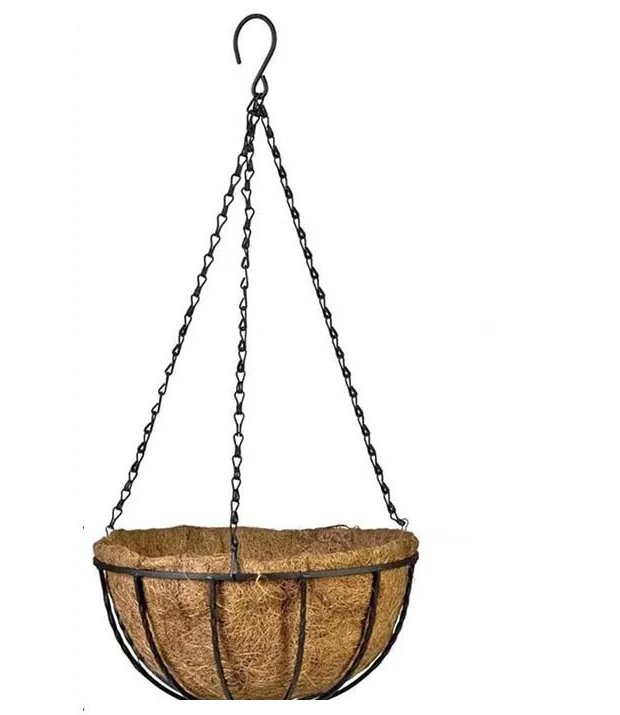
You do not have to buy a special basket. Laying a plastic circle in the base of a coco liner, with a couple of holes punched an inch up the side rather than at the very bottom, creates a small reservoir that does much the same thing.
It costs nothing, keeps the look of a traditional basket, and is the cheapest watering improvement available - the lining guide covers fitting a liner, and the liners range has the coco ones.
Water-retaining granules
The other low-effort route. Mixed into the compost at planting, they swell and hold water, releasing it as things dry.
They work, within limits, and they do not add the weight a reservoir does. In a heatwave they are not enough on their own - the planting guide covers what to mix in.
Feeding changes slightly
Worth knowing. With a reservoir you are often adding feed to the water rather than watering feed through the compost from the top.
Use a liquid feed at the stated dilution and do not be tempted to strengthen it because there is less frequent application - a concentrated feed sitting against roots is not a kindness. The basket range covers the containers themselves.
Cleaning the reservoir
Standing water in a warm basket grows things. At the end of the season, tip the reservoir out, rinse it and let it dry before storing.
During the season, letting it run empty occasionally rather than constantly topping it up is both better for the roots and less likely to go stagnant.
Drainage still matters
A self-watering basket should still have an overflow or drainage point above the reservoir, so a downpour cannot fill the whole thing and drown the roots.
If yours has none, that is worth knowing before a wet fortnight - and it is a reason to check the design rather than trusting the label.
Versus a drip system
The honest comparison. A reservoir helps one basket for a few days. A drip system on a timer covers any number of baskets indefinitely, but costs more and takes an afternoon to install.
For one or two baskets, a reservoir. For four or more, or for a proper holiday, a drip kit - the watering systems guide compares them, and the solar drip kit is the system option.
Or sidestep it
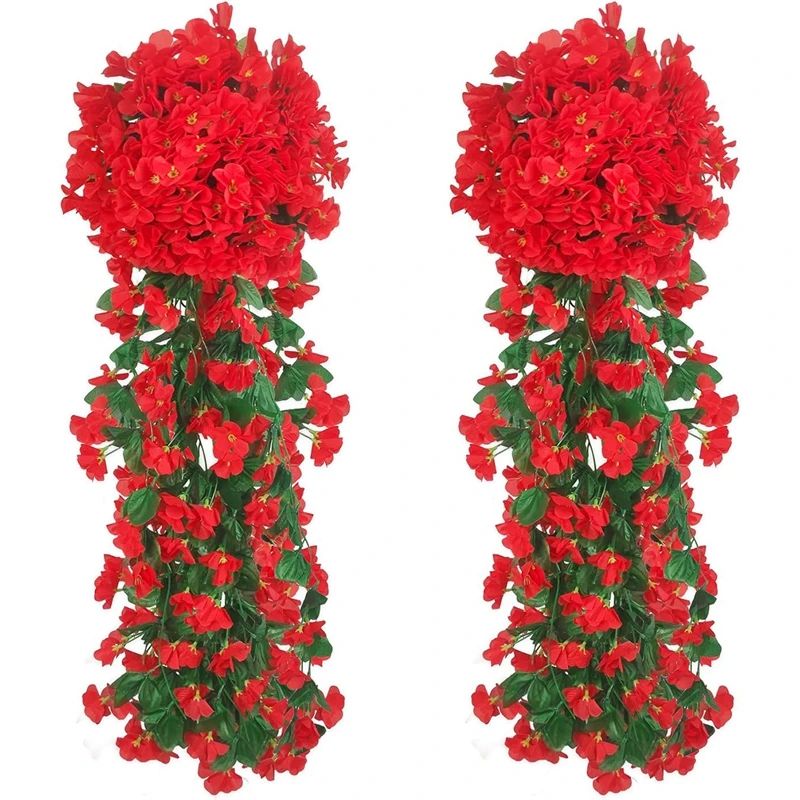
An artificial display needs no water, no reservoir and no timer, which for a high or awkward basket is the least effort of all - the artificial range covers those.
The short version
- They are water-storing rather than self-watering - you still fill the reservoir.
- Expect two or three days instead of one, and a weekend rather than a fortnight.
- A full reservoir is extra weight, so rate the bracket with it full, not empty.
- Wrong in winter, when the risk is waterlogging, and wrong for plants wanting dry feet.
- A plastic circle in the base of a coco liner does much the same for nothing.
Frequently asked questions
How does a self-watering hanging basket work?
A sealed reservoir sits in the base below the compost, and a wick or the compost itself draws water up as the top dries. You fill the reservoir rather than the compost, and it feeds gradually.
Do they really mean I never water?
No - they stretch the interval rather than removing the job. A basket needing daily water in July might manage two or three days, and in a heatwave you may still be filling the reservoir daily.
Do they add weight?
Yes, and it is rarely mentioned. A full reservoir is water, and water is heavy, so check your bracket's rating against the basket with the reservoir full rather than empty.
When should I not use one?
In winter, when the risk is waterlogging rather than drought; with plants that want to dry out between waterings, such as many herbs and succulents; and on any fixing you already have doubts about.
Can I make an ordinary basket self-watering?
Largely, yes. Lay a plastic circle in the base of a coco liner with a couple of holes punched an inch up the side rather than at the bottom. It creates a small reservoir and costs nothing.