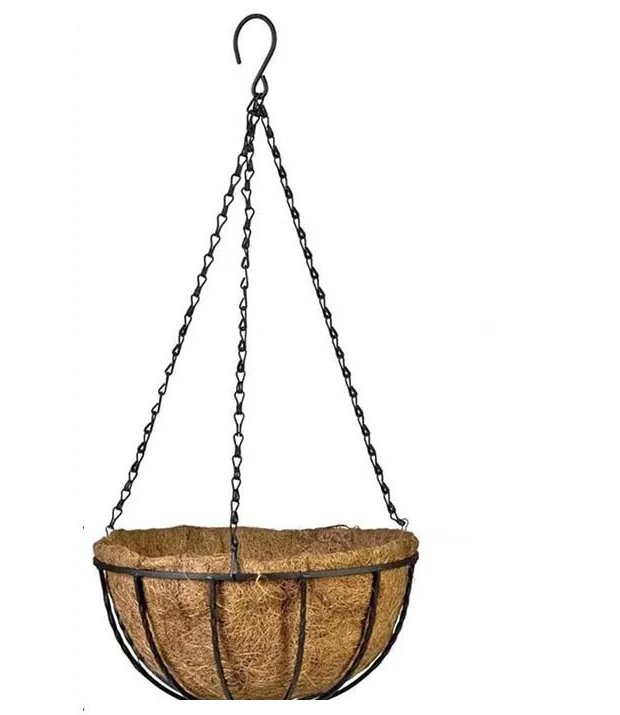
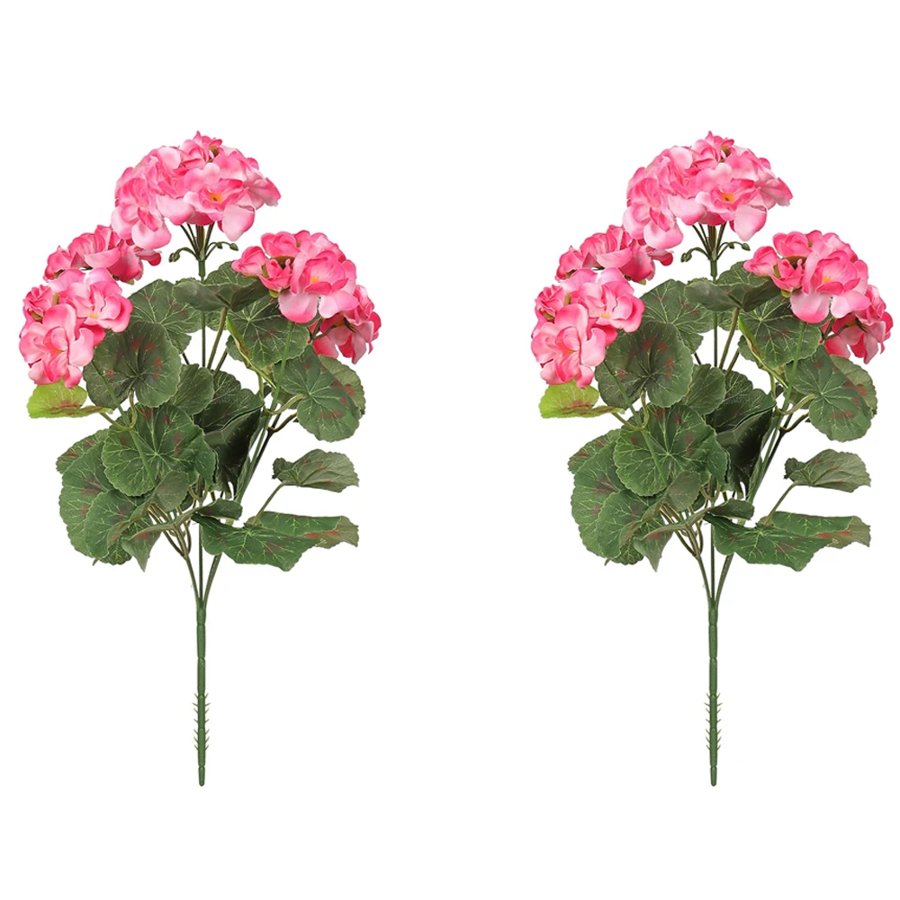
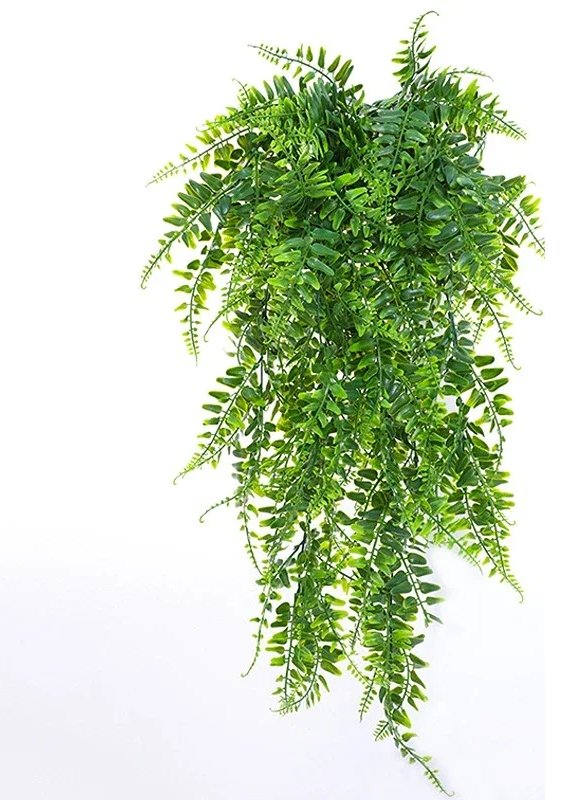
Small usually means 30cm or under. They suit balconies, narrow porches and anywhere you walk past, and they weigh far less watered. The trade-off is that a small basket holds less compost and therefore dries out considerably faster.
Small baskets get treated as the compromise option. In a narrow space they are simply the right answer, and the large one is the mistake.
Where small is genuinely better
Anywhere you walk past. A narrow path or a side passage with a big basket in it means ducking, and you will resent it by week two.
Balconies, where the space is tight and the weight limit may not be yours to decide - the small-space guide covers those.
In groups. Three small baskets along a fence read better than one large one stranded in the middle.
Where the fixing is limited, such as a fence panel or a lighter bracket.
The small range covers them and the large range the other end.
What small gives up
Water, mostly. A smaller volume of compost holds less, so a 30cm basket in July can need watering twice a day where a 40cm one manages on once.
It also holds fewer plants, so the display is smaller - which is fine if that is what the space wants and disappointing if you expected the same impact at a lower price.
The watering problem, and what helps
Since drying out is the main drawback, this is where to spend effort.
A liner with a membrane behind it, or a plastic circle laid in the base of a coco liner, roughly halves how fast it dries - the liners range covers them.
Water-retaining granules mixed into the compost at planting.
Position, since a small basket in blazing all-day sun is the hardest combination there is. Some afternoon shade makes a real difference.
The care and watering guide covers the routine.
Planting a small basket well
Fewer plants, chosen more carefully. There is no room for a mistake to be absorbed, so every plant has to earn its place.
One upright, two or three trailers around the edge, and nothing else is a good starting formula. Trailing plants matter more here than in a large basket, because they are what makes a small basket look generous rather than mean - the trailing plants guide covers those.
The plants themselves come from a nursery - we sell the basket, the liner and the bracket.
Groups beat singles
The design point worth knowing. One small basket on a large wall looks lost. Three at staggered heights looks intentional and fills the same space as a large basket would, with more interest.
Keep them the same style and vary only the height, which reads as a scheme rather than as three separate decisions.
Brackets for small baskets
Lighter and shorter, but the same three rules: reach past half the diameter, load above the watered weight, fixings suited to the wall.
A small basket is forgiving enough that people skip the check - it is still a wet weight above head height, and a fence panel still flexes - the brackets guide covers choosing, and the brackets range has the options.
Wall pots as an alternative
Worth considering in a genuinely narrow space. A wall-mounted pot projects less than a hanging basket, cannot swing into anyone, and sits flat against the surface.
A semicircular wall pot is the shallowest option - the wall and fence range covers those, and the indoor range covers fitting them.
Where to hang a small basket
Closer to eye level than you would hang a large one, because a small display needs to be seen to work.
A small basket hung high reads as an afterthought - there is not enough of it to carry at distance. At head height beside a door, or at chest height along a fence, it has presence.
That also makes watering easy, which matters more with a small basket than a large one - the care guide covers the routine.
Hanging planters as an alternative
Worth a look if a traditional basket feels like more than the space needs.
A hanging planter is a solid pot on cords or chains rather than an open basket with a liner, which means no side planting, less drying out and a tidier look. In a small or modern space that suits a lot of people better.
A woven straw planter and a macrame hanger are both that idea - the hanging planters range covers them.
Small and artificial
A good combination, because the one real drawback of a small basket is watering and artificial removes it entirely. In a tight passage where you cannot easily get a can up, that is the practical answer - the artificial range covers those.
What to buy
Three small baskets and three brackets rather than one large basket, if the space is narrow. Free UK delivery over £20 and a flat £5.99 below, with 30 days to return anything - the returns page has the terms.
The short version
- Small is the right answer in a narrow space, not a compromise on a large one.
- The trade-off is water - a 30cm basket can need watering twice daily in July.
- A membrane behind the liner roughly halves how fast a small basket dries.
- Three small baskets at staggered heights beat one large one on a big wall.
- In a genuinely narrow passage, a wall pot beats a hanging basket outright.
Frequently asked questions
What counts as a small hanging basket?
Usually 30cm or under across the rim. They suit balconies, narrow porches, groups along a fence, and anywhere the fixing is limited, such as a fence panel or a lighter bracket.
Do small baskets dry out faster?
Considerably. A smaller volume of compost holds less water, so a 30cm basket in July can need watering twice a day where a 40cm one manages on once. That is the main trade-off.
How do I stop a small basket drying out?
Use a liner with a membrane behind it, or lay a plastic circle in the base of a coco liner, which roughly halves the drying rate. Water-retaining granules help, and some afternoon shade helps most of all.
Is one large basket better than three small ones?
On a big wall, three at staggered heights usually look better and fill the space with more interest. In a narrow passage the small ones win outright, because a large basket means ducking every time you pass.
Do small baskets still need a proper bracket?
Yes. The same three rules apply - reach past half the diameter, load above the watered weight, fixings suited to the wall. It is still a wet weight above head height and a fence panel still flexes.